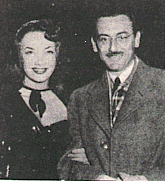
| Carmen Miranda Carmen Miranda (1909–1955) was Ary Barroso’s principal female interpreter during the ’30s and ’40s. Here are a few of the numerous Barroso tunes she recorded. |  |
|
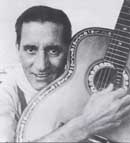
 | Sílvio Caldas Sílvio Caldas, O Caboclinho Querido (1908–1998), was one of Brazil’s foremost seresteiros (romantic singers). |
One of the Big Four male singers of the Radio era, Sílvio was an accomplished songwriter in his own right—he penned a number of classic songs, including the masterpiece “Chão de Estrelas,” co-authored with Orestes Barbosa. Sílvio Caldas’ recording career extended over six decades, during which time he was Ary Barroso’s premier male interpreter. Here are some of Ary’s songs made famous in Sílvio Caldas’ voice. |
Maria
No Rancho Fundo No rancho fundo
Tu Teu olhar é um sonho azul O mais lindo luar, tu
É Mentira, Oi! É mentira, oi! É mentira, oi! Anda por aí falando Quem se dá comigo sabe | Faceira Foi num samba E desceste lá do morro
Risque Deixe Creia
Morena Boca de Ouro Morena boca de ouro
Segura Esta Mulher Segura esta mulher Eu não sei o que vai ser, meu amor Segura esta mulher Fui bem pesadinho, eu sei, meu amor Segura esta mulher |
Francisco Alves Sings Francisco Alves, the legendary Rei da Voz, aka Chico Viola (1898–1952), was Brazil’s first great popular recording star. He’s gone down in history as the first singer to record “Aquarela do Brasil,” in a six-minute recording that occupied both sides of a 78-rpm disc. The grand orchestral arrangement by maestro Radamés Gnattali remains a standard to this day. |
|
| Aquarela do Brasil Brasil, meu Brasil brasileiro Ô, abre a cortina do passado Brasil, terra boa e gostosa Ô, esse coqueiro que dá côco
Sem Ela Eu vivia quieto no meu canto Nosso barracão, ninho de amor Deste sonho um dia despertei
| Caboca Caboca
Foi Ela Quem quebrou meu violão de estimação |
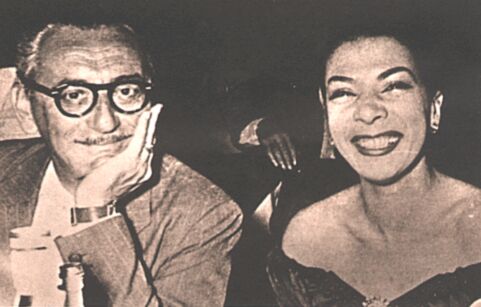 | |
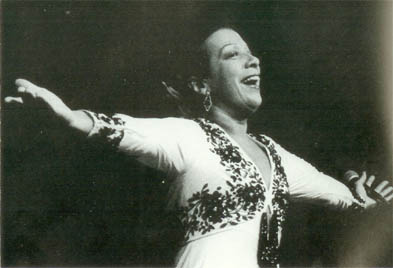
Elizeth Cardoso Elizeth Cardoso (1920–1990), whose recording career began in 1950 but who had been singing professionally since 1936, was the First Lady of Brazilian Popular Music. Possessed of a beautiful voice, perfect diction, and a wide interpretative range, Elizeth put her mark on sambas, romantic songs, and classical works with equal ease. Elizeth Cardoso was Ary’s favorite female singer in his later years. Shortly before she died, Elizeth recorded the exquisite album Ary Amoroso as a tribute to the late master. |
Inquietação Quem se deixou escravizar Desengano, alegria
Na Batucada da Vida No dia em que apareci no mundo
Ocultei Ocultei
No Rancho Fundo No rancho fundo
Trapo de Gente Aconteceu justamente o que mais eu temia | Faixa de Cetim Bahia
Folha Morta Sei que falam de mim
Por Causa Desta Cabocla É tarde
Caco Velho Reside no subúrbio do Encantado
As Três Lágrimas Eu chorei
Pra Machucar Meu Coração Está fazendo um ano e meio, amor Quem sabe não foi bem melhor assim |
|
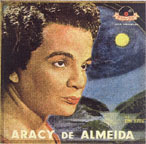
 | Aracy de Almeida Sings Ary Barroso Aracy de Almeida was one of Ary’s favorite singers, as well as being the foremost Noel Rosa interpreter. In early 1939, she recorded Ary’s samba “Camisa Amarela” and made it one of the jewels of MPB. Ary was so impressed that he offered Aracy “Aquarela do Brasil” to record. |
Aracy went to Leslie Evans, the artistic director of her label, RCA Victor, and told him she had a wonderful new samba she wanted to record. Evans, always referred to as Mister Evans, had the reputation of being an unpleasant fellow. According to some accounts, he used to cover his mouth with a handkerchief when talking to popular singers, as if he were afraid of contagion. Not without a feel for Brazilian music, he nevertheless is said to have characterized samba as “música de negros, feita de negros para negros.” Ary wanted “Aquarela do Brasil” to be recorded with a full orchestra, and Aracy communicated this condition to Evans. The director, used to having his way, was unwilling to commit more than a conjunto regional (a small choro ensemble) to the recording. As a result, Aracy recorded another samba, now forgotten, while Francisco Alves had the honor of being the first to record Brazil’s greatest song. |
Camisa Amarela Encontrei o meu pedaço na Avenida de camisa amarela Voltou às sete horas da manhã | Deixa o Mundo Falar Nosso amor pra você já morreu
|
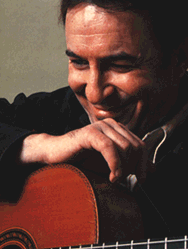
João Gilberto João Gilberto (1931– ) hasn’t recorded many Ary Barroso songs, but his recordings are all ground-breaking and definitive. No other performer in the past forty years has done as much to keep Ary’s name and work alive. João’s 1973 instrumental version of “Na Baixa do Sapateiro” has influenced generations of musicians, while his three vocal renditions of “Aquarela do Brasil” turned the old war horse into a fresh new song. |
|
 | É Luxo Só Olha, essa mulata quando dança
Prá Machucar Meu Coração Tá fazendo um ano e meio, amor Quem sabe, não foi bem melhor assim
Isto Aqui o Que É Isto aqui ô ô | Morena Boca de Ouro Morena boca de ouro
No Tabuleiro da Baiana No tabuleiro da baiana tem |

| Orlando Silva Sings Ary Barroso Orlando Silva, O Cantor das Multidões (1915–1978), is considered by many, including João Gilberto, to have been the greatest popular singer in the world during the brief period of his prime, from 1935 to 1942. Possessed of a unusually beautiful tenor voice, impeccable technique, and the ability to interpret any popular genre, Orlando also knew how to select his repertoire. Great standards such as “Carinhoso,” “Rosa,” and “Lábios Que Beijei” will forever be linked to his name. Orlando didn’t sing many Ary Barroso compositions during his few years of
Quero Dizer-te Adeus!
Trapo de Gente
Caco Velho
Terra Seca
Tu O mais lindo luar, tu | ||

Copyright © 1997–2020 Daniella Thompson & Ricardo Paoletti. All rights reserved.